
Key Takeaways
- Choosing a wall clock involves balancing design, size, and functionality
- Different styles suit different interiors, from modern to traditional
- Materials and finishes affect both durability and visual impact
- Placement plays a key role in how a clock enhances a room
- A well-chosen clock can act as both a focal point and a practical feature
- Understanding your space helps narrow down the right option
Why Wall Clocks Still Matter in Modern UK Homes
Wall clocks have evolved far beyond simple timekeeping.
In modern UK interiors, they serve as both functional tools and design features. A well-chosen clock can define a wall, complement your furniture, and bring structure to a space.
At Metro Elegance, we approach wall clocks as part of a wider interior story. Each piece is selected to combine practicality with refined design, helping you create a home that feels both stylish and comfortable.

Understanding the Different Types of Wall Clocks
Before exploring brands or collections, it helps to understand the main types of wall clocks available.
Modern wall clocks
These focus on clean lines, minimal detailing, and neutral colours. They work well in contemporary spaces where simplicity is key.
Traditional wall clocks
Often featuring decorative frames and classic numerals, these suit more traditional British interiors.
Statement clocks
Larger designs that act as focal points, ideal for living rooms or open-plan spaces.
Functional clocks
Designed primarily for readability and practicality, often used in kitchens or offices.
If you are unsure which style suits your space, this guide offers a deeper look at how to choose the right option:
how to choose the perfect wall clock for your UK home
What to Look for When Choosing a Wall Clock
Selecting the right wall clock involves more than just appearance.
Size and proportion
A clock should suit the scale of your wall. Large walls benefit from statement pieces, while smaller spaces require more compact designs.
Material and finish
Common materials include metal, wood, and glass. Each creates a different effect within the room.
Visibility and readability
Even decorative clocks should remain easy to read. Clear numerals and contrast help ensure practicality.
Placement
Consider where the clock will be viewed from. Positioning affects both function and overall design.
Understanding these factors helps narrow down your choices and ensures the clock fits naturally into your home.
Exploring Modern Wall Clock Designs
Modern interiors often benefit from clocks that blend seamlessly with the space.
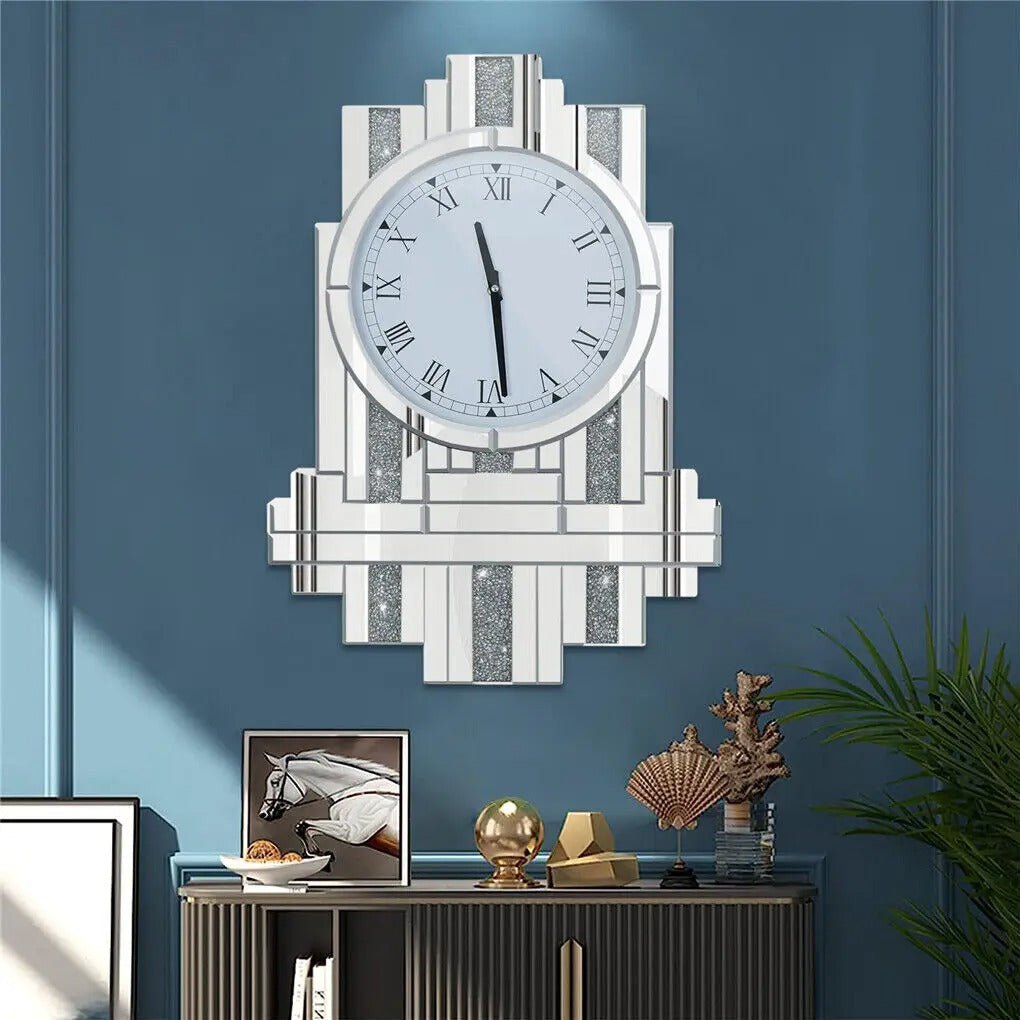
The wall clock collection includes designs that focus on clean finishes and balanced proportions, making them suitable for a wide range of interiors.
A piece like the modern oblong wall clock long silver mirror decorative clock offers a sleek, reflective surface that enhances light while maintaining a contemporary look.
Modern clocks work particularly well in:
- Living rooms with neutral palettes
- Open-plan spaces
- Minimalist interiors
Statement Clocks as Focal Points
In larger rooms, a statement clock can replace traditional wall art.
Instead of multiple smaller pieces, a single bold clock can define the space and draw attention.
For example, the large 60cm round mirrored wall clock with beveled glass skeleton clock creates both visual impact and depth through its reflective design.
Statement clocks are particularly effective:
- Above fireplaces
- On feature walls
- In spacious living areas
Matching Your Clock to Your Interior Style
A wall clock should feel like part of your overall design rather than an afterthought.
For modern interiors
Choose clean shapes, minimal detailing, and neutral finishes.
For industrial spaces
Opt for metal frames and darker tones.
For classic interiors
Decorative frames and traditional numerals work well.
If you are exploring how materials influence design, this guide provides useful insight:
understanding wall clock materials and finishes
Combining Wall Clocks with Other Decor
Wall clocks can work alongside other decorative elements to create a more complete look.
For example:
- Pairing a clock with artwork in a gallery wall
- Combining reflective clocks with mirrors
- Using clocks to balance large furniture pieces
The wall mirror decor collection offers complementary pieces that can enhance your overall wall design.
This layered approach helps create a more cohesive and visually interesting space.
Placement Tips for Different Rooms
Where you place your clock can significantly affect how it functions and looks.
Living room
Position it above a sofa or fireplace for visibility and balance.
Kitchen
Keep it within easy view while cooking, often near preparation areas.
Hallway
Use it as a subtle focal point that also serves a practical purpose.
Bedroom
Choose a quieter design and place it where it does not dominate the space.
If you need more guidance, this resource explores placement strategies in detail:
where to position a wall clock for maximum impact
Avoiding Common Buying Mistakes
Choosing a wall clock can seem straightforward, but there are a few common mistakes to avoid.
Choosing the wrong size
A clock that is too small can get lost on a large wall, while one that is too large may overwhelm the space.
Ignoring placement
Buying a clock without considering where it will go can lead to awkward positioning.
Overlooking style consistency
Mixing too many styles can make the room feel disjointed.
Focusing only on appearance
A clock should also be practical and easy to read.
Taking a more considered approach helps ensure your choice works both visually and functionally.
Building a Timeless Setup
A well-chosen wall clock should continue to work as your interior evolves.
Instead of following short-term trends, focus on:
- Neutral finishes
- Balanced proportions
- Versatile designs
At Metro Elegance, we curate collections that are designed to fit into a wide range of interiors, making it easier to create a space that feels consistent over time.
Final Thoughts
A wall clock is one of the few items in your home that combines function and design so seamlessly.
By understanding styles, materials, and placement, you can choose a piece that enhances your space while remaining practical for everyday use.
At Metro Elegance, we believe that thoughtful design choices make a lasting difference. With the right wall clock, even a simple wall can become a defining feature of your home.
CTA
Looking to find the right wall clock for your space?
Explore our curated collection or speak with our team for personalised advice.
👉 Contact Metro Elegance
FAQ
What should I consider when buying a wall clock in the UK?
When choosing a wall clock, consider size, style, material, and placement. The clock should suit the scale of your wall and complement your interior design. It is also important to ensure that it is easy to read and positioned where it can be viewed comfortably.
Are large wall clocks suitable for small rooms?
Large clocks can work in smaller rooms if used carefully. They can act as a focal point and reduce the need for additional wall decor. However, it is important to ensure they do not overwhelm the space or make it feel crowded.
Which wall clock style is best for modern interiors?
Modern interiors typically benefit from clocks with clean lines, simple shapes, and neutral finishes. Minimal designs tend to integrate more easily into contemporary spaces without adding visual clutter.
Where is the best place to hang a wall clock?
The ideal placement depends on the room. In living rooms, above sofas or fireplaces works well. In kitchens, place it where it is easily visible. The key is to ensure it is at a comfortable viewing height and fits naturally within the layout.
Can wall clocks be used as decorative pieces?
Yes, many wall clocks are designed to serve both functional and decorative purposes. Statement clocks, in particular, can act as focal points and replace traditional wall art in certain spaces.
How do I match a wall clock with my furniture?
Look at the materials and finishes of your existing furniture. Choosing a clock with complementary tones helps create a cohesive look. For example, metal clocks pair well with industrial interiors, while wooden designs suit warmer spaces.
Do wall clocks require regular maintenance?
Most wall clocks require minimal maintenance. Regular dusting and occasional battery replacement are usually sufficient. Keeping the clock clean helps maintain its appearance and ensures it continues to function properly.