
Key takeaways
- Wall clock placement affects balance, visibility, and how a room feels
- Height, wall size, and nearby furniture should guide positioning
- Living rooms and kitchens benefit from central, unobstructed placement
- Hallways and open-plan homes need thoughtful spacing to avoid clutter
- The right placement can make a wall clock feel intentional, not decorative filler
Wall clocks do far more than tell the time. In UK homes, they often become quiet anchors that organise walls, guide the eye, and bring structure to everyday living spaces. At Metro Elegance, we see many beautifully designed clocks lose their impact simply because they are hung too high, too low, or in the wrong spot.
This guide breaks down where to hang your wall clock for maximum impact, room by room. Whether you are styling a new space or repositioning an existing piece, thoughtful placement can transform how your clock and your room are experienced.
Why wall clock placement matters
A wall clock sits at the intersection of function and design. It needs to be easy to read, but it also needs to feel visually balanced within the room. Poor placement can make a wall feel empty or crowded, while good placement helps a space feel complete.
In many UK homes, wall space is limited or shared with doors, windows, and furniture. That makes placement choices even more important. At Metro Elegance, we encourage treating wall clocks as you would artwork or mirrors, with attention to proportion and context.
General rules for wall clock placement
Before looking at individual rooms, a few universal principles apply.
First, aim for eye level. In most homes, the centre of the clock should sit roughly at standing eye height. This ensures readability and visual comfort.
Second, give the clock breathing room. Avoid crowding it with shelves, frames, or lighting fixtures. A wall clock needs clear space around it to feel intentional.
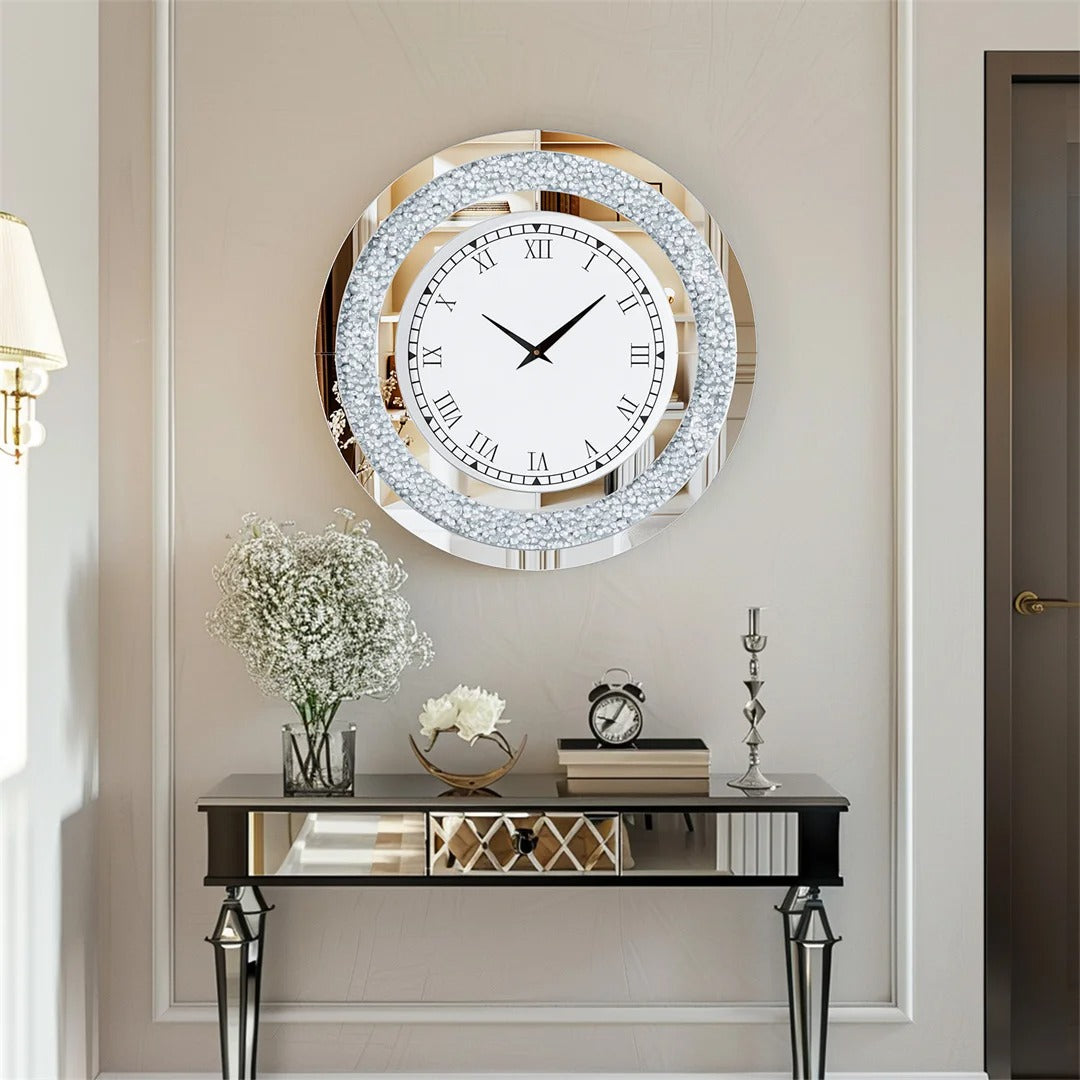
Third, consider what sits below. A clock above a sofa, sideboard, or console should relate to the width of that furniture rather than floating aimlessly on the wall.
These principles apply regardless of clock style or room type.
Living room wall clock placement
The living room is one of the most common places for wall clocks, and also one of the easiest to get wrong.
Above sofas or fireplaces
Placing a wall clock above a sofa or fireplace can work beautifully when proportions are right. The clock should be centred horizontally and not pushed too close to the ceiling.
A larger design such as the large 60cm round mirrored wall clock suits wider walls and creates a strong focal point without needing additional artwork.
Feature walls and open spaces
If your living room has a feature wall, a clock can replace traditional artwork. This works especially well in modern interiors where simplicity matters.
For broader styling guidance, our article on choosing the right wall clock for living rooms explains how size and style influence placement.
Kitchen wall clock placement
Kitchens benefit from wall clocks that are easy to see at a glance without interrupting workflow.
Near dining or prep areas
A clock placed near a dining nook or prep area helps with daily routines while staying out of the way of cabinets and appliances. Avoid placing clocks too close to extractor fans or cooking surfaces.
Height and visibility
Kitchen clocks are often hung slightly higher than living room clocks to remain visible from different angles. Ensure they are not blocked by cupboard doors when open.
A clean, reflective design like the 24 inch silver mirrored wall clock works well in kitchens by reflecting light and maintaining clarity.
Hallway and entryway placement
Hallways are often narrow and overlooked, yet they are ideal spaces for wall clocks.
Creating character in small spaces
In entryways, a wall clock adds personality without taking up floor space. Placement should be centred on the main wall you face when entering.
Slim or decorative designs help hallways feel styled rather than cluttered.
Avoiding visual congestion
Avoid placing clocks too close to coat hooks, doors, or lighting. Keeping the clock isolated helps it read clearly as a design element.
If you are working with narrow spaces, our guide on where wall clocks work best in British interiors offers useful placement ideas.
Dining room wall clock placement
Dining rooms often benefit from subtle structure rather than bold statements.
Side walls over central placement
Instead of centring a clock on the main wall, consider placing it on a side wall near a sideboard or mirror. This keeps the dining focus on the table while still providing function.
Balancing with lighting
Make sure the clock does not compete with pendant lighting or chandeliers. The two should complement each other rather than overlap visually.
Wall clocks in open-plan homes
Open-plan living is common in modern UK homes, and wall clocks can help define zones.
Using clocks to mark zones
A clock placed near the dining area helps distinguish it from the living space without physical dividers. In kitchen-diners, clocks often sit between zones for shared visibility.
Avoiding duplication
In open-plan layouts, one well-placed clock is usually enough. Multiple clocks can create visual noise unless carefully coordinated.
Our article on defining spaces using wall décor explores similar principles using mirrors and lighting.
Bedroom wall clock placement
Bedrooms require a softer approach.
Place clocks where they are visible but not dominant. Side walls or positions opposite the bed often work better than directly above the headboard.
Avoid placing clocks where ticking sounds might be noticeable at night, especially in quieter rooms.
A decorative option such as the irregular mirrored wall clock with crystal accents adds interest without feeling intrusive.
Height mistakes to avoid
One of the most common placement errors is hanging clocks too high. This often happens when people align clocks with door frames or ceiling lines.
As a rule, ignore architectural lines and focus on eye level and furniture alignment instead. The clock should relate to how the room is used, not just how it is built.
Pairing wall clocks with mirrors and furniture
Wall clocks rarely exist in isolation. They often sit near mirrors, console tables, or shelving.
Mirrored clocks pair naturally with reflective surfaces. If you are styling a hallway or living room, consider how the clock interacts with nearby mirrors from our living room mirror collection.
The aim is visual conversation rather than exact matching.

Choosing the right clock for the right wall
Placement and clock design go hand in hand. Large walls suit larger clocks. Textured or patterned walls benefit from simpler designs. Clean walls can handle more decorative shapes.
Our curated wall clock collection is designed to work across a range of wall sizes and interior styles, making placement easier from the start.
Our approach at Metro Elegance
At Metro Elegance, we believe placement is as important as product choice. A well-placed clock feels like part of the architecture of a room rather than an added accessory.
We design and select wall clocks with UK living spaces in mind, considering typical layouts, ceiling heights, and room functions. The goal is always balance, clarity, and ease of living.
Final thoughts
Wall clock placement is not about rigid rules. It is about understanding how a room works and how people move through it. When placed thoughtfully, a wall clock brings order, rhythm, and quiet confidence to a space.
If you are unsure where to place your wall clock or which design suits your wall best, our team at Metro Elegance is always happy to help.
Get in touch with us here:
Contact Metro Elegance
Frequently asked questions
What is the ideal height to hang a wall clock?
Most wall clocks work best when the centre sits at standing eye level, adjusted slightly based on furniture below.
Can I hang a wall clock above a TV?
It is usually better to avoid this, as the TV draws attention and can make the clock harder to read.
Where should a wall clock go in a small living room?
Side walls or spaces above slim furniture work well without overwhelming the room.
Are wall clocks suitable for open-plan kitchens?
Yes. One centrally visible clock often works better than multiple smaller ones.
Should wall clocks be centred on the wall?
They should be centred in relation to nearby furniture or zones, not necessarily the wall itself.
Can a wall clock replace artwork?
Yes. Larger or decorative wall clocks often serve the same visual role as wall art.
Do mirrored wall clocks need special placement?
They benefit from natural light and open walls where reflections can enhance brightness rather than cause glare.