
Key Takeaways
- A wall clock is one of the few pieces of home decor that stays on the wall year-round, which means styling the space around it seasonally can refresh a room without major changes.
- The surrounding decor - mantelpiece objects, wall arrangements, and nearby furniture - does most of the seasonal work, while the clock itself remains the anchor.
- Light quality changes dramatically across UK seasons, and clock placement or finish choice can be adjusted to respond to this.
- Mirrored and crystal-detailed clocks are particularly useful in autumn and winter when natural light is limited, as they reflect and amplify available light.
- Swapping a clock altogether between seasons is a practical option for homeowners who want a more significant refresh without redecorating.
- Metro Elegance offers a range of decorative wall clocks suited to different seasonal aesthetics, from light and airy spring styles to rich, reflective winter designs.
Britain has four distinct seasons, and they affect how our homes feel in ways that go well beyond temperature. The quality and quantity of natural light shifts considerably between January and July. The colours we gravitate toward in our homes tend to change. The way we use rooms - how much time we spend in them, whether we want them to feel cosy or open - shifts with the seasons too.
Wall clocks are not typically the first thing people think of when it comes to seasonal decorating. But because they occupy a fixed and prominent position on the wall, the decor around them - and sometimes the clock itself - can be updated seasonally in ways that make a real difference to how a room feels throughout the year.
This guide takes a practical, room-by-room look at how to style your wall clock across each UK season, with specific ideas for what to change, what to keep, and how to make the most of what the season offers.
Why Seasonal Styling Around a Wall Clock Works
The logic is straightforward. A wall clock rarely moves. It sits in the same position all year and provides a fixed point of reference in the room. The objects around it - on the mantelpiece below it, on shelves beside it, or on the wall alongside it - can change to reflect the season without disrupting the room's overall layout.
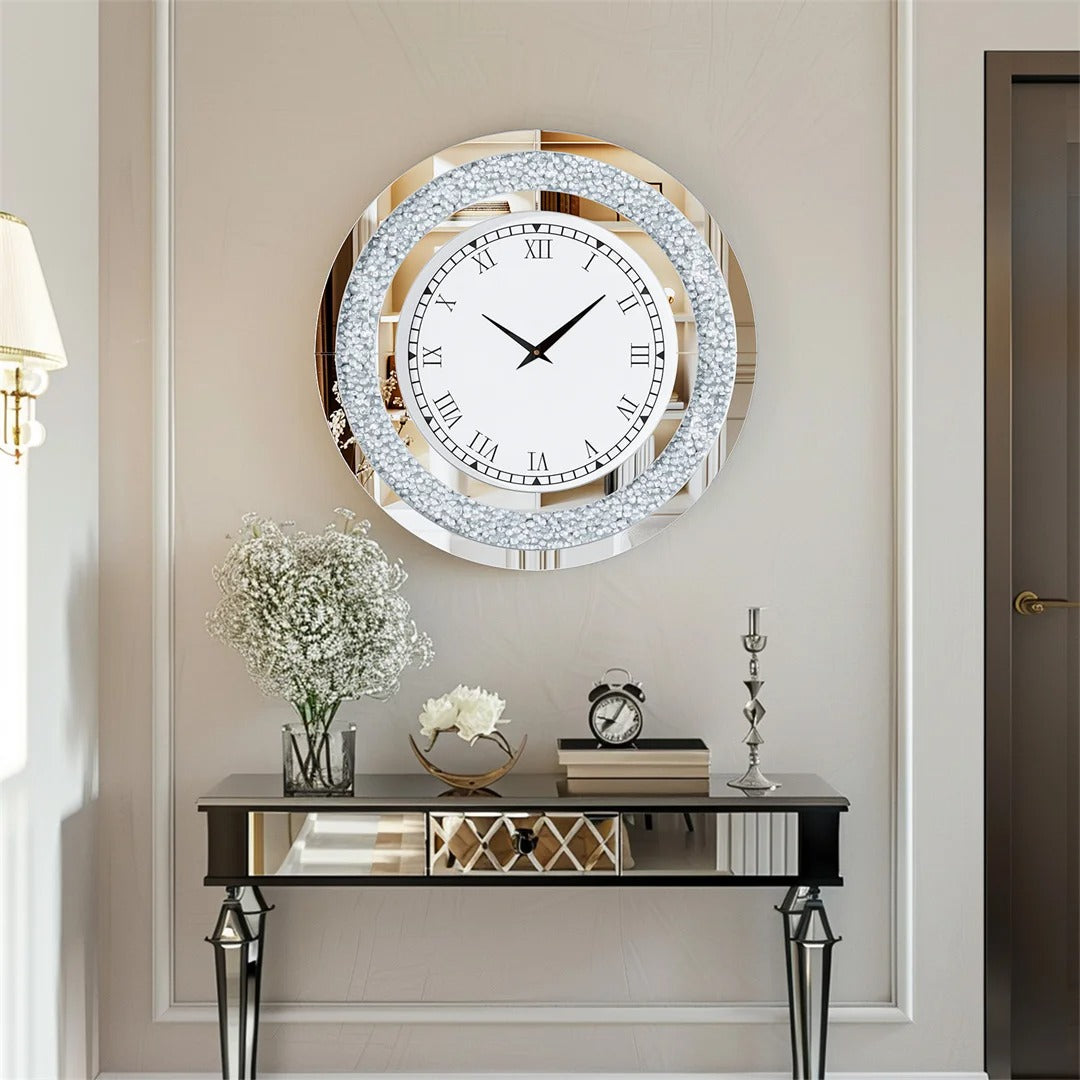
Think of the clock as the constant and the surrounding decor as the variable. In spring, the objects grouped with or beneath it might be lighter, fresher, and more minimal. In winter, they might be richer, warmer, and more layered. The clock provides continuity; the seasonal styling provides the shift.
This approach is also economical. Rather than buying a new clock for each season - though that is certainly an option - you can achieve a seasonal refresh by changing relatively inexpensive accessories: candles, small vases, botanical prints, decorative objects, and textiles that complement the clock's position and draw it into the seasonal mood of the room.
Spring: Light, Minimal, and Open
UK springs bring longer days and improving natural light, and most people instinctively respond by opening up their homes - clearing surfaces, washing windows, and introducing fresher, lighter elements. The styling around a wall clock can reflect this instinct.
What to Change Around the Clock
In spring, a mantelpiece or shelf beneath a wall clock benefits from being cleared back. Remove heavier winter objects - dense candle holders, dark-toned ceramics, thick textiles - and replace them with lighter, simpler pieces. A small vase with a few stems, a pale ceramic object, or a single plant in a simple pot creates a fresher arrangement that suits the season without looking bare.
On the wall around the clock, if you have seasonal prints or framed art that you rotate, spring is the time for anything that introduces green or neutral tones alongside the clock.
Considering the Clock's Finish in Spring Light
Spring light in the UK is often soft and directional in the mornings, particularly in east and south-facing rooms. A clock with a mirrored or metallic face can catch and reflect this light in a way that feels alive rather than static - the clock almost participates in the quality of the season. Clocks with heavier or darker frames can feel slightly at odds with the lighter seasonal mood, which is one reason some homeowners choose to have two or three clocks they rotate through the year.
If you are looking at what suits spring's lighter aesthetic, our modern oblong silver mirror clock with Roman numerals has the kind of clean, reflective finish that suits rooms in their lighter seasonal mode. The slim silver mirrored face catches light without competing with spring's more pared-back styling.
Summer: Bold, Bright, and Confident
British summers - on the days they deliver - bring long light and an energy that often encourages more confident decorating choices. Rooms feel more expansive, colours look bolder, and there is generally more openness in how people use their living spaces.
Styling the Clock Wall in Summer
Summer is a good time to let the clock stand more independently - perhaps with fewer objects around it and more space on the wall, allowing its shape and design to be appreciated without distraction. If your clock has a distinctive silhouette - an irregular or sculptural frame, for instance - summer styling that clears the surrounding space lets that character show.
If your room benefits from a summer refresh in its broader palette - introducing warmer or deeper tones through cushions, throws, or rugs - the clock's styling should connect to those changes. A clock with gold or warm metallic detailing sits particularly well in rooms that lean warmer in summer.
Pairing the Clock with Seasonal Lighting
Summer evenings in the UK are long, and the quality of light at dusk - warm and golden - creates a very particular atmosphere in interiors. A clock with a crystal or mirrored face can catch this evening light beautifully, creating a soft reflective effect that adds to the warmth of the room rather than interrupting it.
Our large irregular crystal crushed wall clock with diamond accents and silent quartz movement is the kind of piece that rewards the long British summer evenings. The crystal detailing picks up warm light in a way that plain-faced clocks simply do not, and the irregular silhouette makes it a genuine conversation piece in summer rooms where entertaining tends to be more frequent.
For more background on how different clock designs suit different interior contexts across the year, our overview of how clock design has evolved in British homes provides useful context on the styles that have endured and why.
Autumn: Warm, Layered, and Considered
Autumn is arguably the season where British homeowners invest most effort in their interiors. The nights draw in quickly, the light shifts to lower, warmer tones, and there is a natural pull toward making rooms feel more comfortable and enclosed. This is the season where styling around a wall clock can become most layered and intentional.
Building Up the Surrounding Decor
Autumn is the time to build back the objects around your clock. On a mantelpiece, this might mean adding candle holders in amber or dark glass, a small collection of objects in earthy tones, or a plant with richer foliage to replace the pared-back spring arrangement. The goal is a sense of abundance and warmth - a room that feels well used and cared for.
Wall groupings around a clock can also be built up in autumn. A clock positioned centrally, with a framed print or small decorative mirror to one side, feels more substantial than the same clock hanging alone. Autumn is a good time to add these secondary elements, as the layered look suits the season's character.
Clock Finishes That Suit Autumn
Gold tones, warm bronze, and dark metal frames all tend to work well in autumn interiors. They connect naturally to the season's palette of amber, ochre, and deep green. If your primary clock has a cooler silver finish, you might consider adding warm-toned objects around it to bridge the gap between the clock and the seasonal decor.
Mirrored and crystal-detailed clocks become especially useful as autumn light diminishes. A clock with a reflective face positioned to catch a lamp or candle light creates a pool of warmth on the wall that amplifies the ambient light in the room - a genuine practical benefit as the evenings get darker earlier.
For guidance on how to incorporate wall decor into a seasonal layering approach, our piece on creating visual balance in UK interiors with mirrors and wall decor covers the underlying principles that apply equally to wall clocks.
Winter: Rich, Reflective, and Atmospheric
Winter interiors in the UK face a genuine practical challenge: limited daylight hours mean rooms are often lit artificially for more hours than they are lit naturally. A wall clock - and the decor around it - can contribute to how light is managed in the room during these months.
Making the Most of Artificial Light
In winter, a clock with a mirrored or crystal face becomes a functional as well as decorative choice. Positioned on a wall that receives light from a central ceiling fitting or a nearby floor lamp, a mirrored clock reflects that artificial light around the room, making the space feel brighter and more animated than it might with a plain-faced clock.
Our 24-inch large silver mirrored wall clock with a modern decorative design is a good example of a clock that serves this purpose well. The large mirrored face reflects a meaningful amount of light back into the room, and its scale means it holds visual presence in winter rooms where the light is otherwise low and flat.
Winter Styling Around the Clock
Winter is the season for the richest layering around a clock. Candles on the mantelpiece below, a wreath or garland element during December, deeper-toned textiles visible in the room's broader arrangement - all of these contribute to an interior that feels deliberately cosy and warm rather than simply cold and dark.
The clock itself might also be the moment to consider whether a seasonal swap is worth making. If your room has a lighter, more minimal clock that suits spring and summer well, winter might be the time to replace it with a richer, more decorative piece - something with crystal detailing, a dark or gold-toned frame, or a mirrored face that catches candlelight.

At Metro Elegance, we see customers approach seasonal clock changes in different ways. Some prefer a single versatile clock that works year-round, investing in the surrounding decor to create the seasonal shift. Others treat wall clocks more like a seasonal accessory, rotating pieces from our decorative wall clock collection to suit the time of year. Both approaches are valid, and the right choice depends largely on how much seasonal change you want in your interiors.
Practical Tips for Seasonal Clock Styling
Keep a simple seasonal styling kit. A small collection of objects - candle holders, small vases, ceramic pieces - in tones that suit different seasons makes it straightforward to refresh the area around your clock without buying new things each time.
Think about what is directly below the clock. Whether that is a mantelpiece, a shelf, a console table, or simply wall space, the area below the clock is usually where seasonal styling has the most impact. Changing the objects in this zone does more to shift the seasonal feel than changing anything else.
Consider clock position in relation to seasonal light. If your room's natural light shifts significantly between seasons - as it does in most UK homes - it is worth thinking about whether your clock's position is making the most of the light available. Autumn and winter light entering at a lower angle from the south can catch a mirrored clock face beautifully if the positioning is right.
Do not over-theme. Seasonal styling does not mean adding obvious seasonal motifs. The most effective seasonal changes in British interiors tend to be about tone, texture, and warmth rather than literally representational objects.
For a detailed look at the role of wall decor in the broader context of a UK living room's seasonal character, our guide on how wall clocks contribute to a room's overall decor in UK homes explores this in more depth.
Thinking About Your Own Seasonal Refresh?
If you would like to discuss which wall clock style might suit your home across different seasons, or if you have questions about pairing a clock with specific seasonal decor, the Metro Elegance team is happy to help. Get in touch through our contact page and we can point you in the right direction.
Frequently Asked Questions
Do I need a different wall clock for each season?
Not necessarily. Many homeowners use a single versatile clock year-round and refresh the surrounding decor - objects on the mantelpiece, nearby textiles, wall groupings - to reflect the season. However, rotating between two clocks with different finishes (one lighter for spring and summer, one richer and more reflective for autumn and winter) is a practical option for those who want a more significant seasonal shift.
What type of wall clock works well in winter UK interiors?
Clocks with mirrored faces, crystal detailing, or metallic finishes in gold or silver tend to work well in British winter interiors. They reflect artificial light, which is valuable during the long dark evenings, and their richness suits the layered, warm aesthetic most homeowners gravitate toward in winter.
How do I style around a wall clock in spring without it looking bare?
Spring styling around a wall clock works best when it is intentionally minimal rather than accidentally bare. A small vase with stems, a single ceramic piece, or a compact plant in a simple pot beneath or beside the clock creates a purposeful arrangement that suits the lighter seasonal mood without feeling empty.
Can changing the objects around a clock make a seasonal difference?
Yes, significantly. The mantelpiece, shelf, or surface beneath a wall clock is where most of the seasonal visual work happens. Changing from heavier, darker autumn objects to lighter spring pieces, or from minimal summer arrangements to layered winter groupings, shifts the feel of the entire wall display without touching the clock itself.
Where should I hang a wall clock to make the most of changing seasonal light?
Position the clock where it can catch natural light during the season when that light is most valuable. In UK autumn and winter, south-facing walls receive the most light at a lower angle; a mirrored clock on or near this wall will reflect available light back into the room. In spring and summer, east-facing walls catch morning light that can animate a reflective clock face early in the day.
Is it worth investing in a mirrored wall clock for a UK home?
A mirrored wall clock serves both a decorative and a practical function in UK homes, where natural light is limited for a significant portion of the year. The reflective face amplifies available light - both natural and artificial - which makes the room feel brighter during darker months. This practical benefit, alongside the decorative quality, makes it a worthwhile consideration for most UK living rooms.
How do I keep seasonal wall clock styling feeling cohesive rather than mismatched?
Connect the seasonal objects around the clock to the broader palette and materials in the room. If your room's winter styling leans toward warm amber and dark green tones, ensure the objects near the clock share those tones rather than introducing unrelated colours. The clock's frame material is a useful anchor: choose seasonal accessories that echo its finish - silver tones with silver objects, gold tones with warm metallic accessories - to keep the arrangement coherent.