
Key Takeaways
- Water damage to wooden plant stands almost always starts small - a drip tray that overflows, a damp floor, a splash from watering - and compounds gradually over time if not addressed.
- The type of wood and its finish at the point of purchase significantly affect how much protection it needs from the start.
- Drip trays and pot liners are the single most practical preventive measure for stands used with planted pots indoors.
- Wood oil, beeswax, and water-resistant sealants each suit different wood types and finishes - matching the product to the wood matters.
- UK humidity levels, while not extreme, are high enough to cause gradual surface changes in untreated or poorly maintained wooden stands, particularly in kitchens and bathrooms.
- Regular inspection of joints, feet, and shelf surfaces allows small issues to be addressed before they become structural problems.
- Proper ventilation around the base of a stand is often overlooked but genuinely reduces the rate of moisture damage at floor level.
Wood is a natural material, and natural materials respond to their environment. That is part of what makes a wooden plant stand appealing - the warmth, the grain, the way it fits into a home rather than sitting in it like a piece of manufactured plastic. But that same quality means wood reacts to moisture, humidity, and repeated water contact in ways that synthetic materials do not.
In the UK specifically, the combination of damp winters, variable heating, and the moisture that comes with keeping plants indoors makes wooden stand care more relevant than it might seem at the point of purchase. A stand that looks solid and well-finished when it arrives can develop surface staining, warping at the joints, or soft spots at the base if water exposure is not managed from the start.
The good news is that the measures required are not complicated or expensive. Most of the damage that shortens the life of a wooden plant stand is preventable with a few straightforward habits. This guide covers the main sources of moisture risk for wooden plant stands in UK homes, what protective treatments work, and how to maintain a stand so it holds up well over time.
At Metro Elegance, we design our wooden stands to be practical as well as good-looking - but the best stand still benefits from being looked after properly.

Understanding Where Moisture Actually Comes From
The obvious source of water damage is overwatering or a pot without a drip tray. But in practice, moisture reaches a wooden plant stand through several routes, and addressing only the obvious one leaves the others unmanaged.
Pot drainage is the most direct source. When a pot is watered, excess water drains through the soil and out of the drainage holes at the base. Without a drip tray, this water sits directly on the wooden shelf of the stand. Repeated exposure softens the surface layer of the wood, encourages mould growth in the grain, and - over time - causes the wood to swell and potentially crack as it dries and re-wets in cycles.
Ambient humidity is a less visible but persistent source of moisture stress for wooden stands. In kitchens and bathrooms especially, steam and condensation raise the ambient moisture level of the air. Wood absorbs this moisture gradually, which can cause it to expand slightly. When the room dries out, it contracts again. This repeated cycle - expansion and contraction - is what causes joints to loosen and surfaces to crack or warp over time, even without any direct water contact.
Floor moisture affects the base of the stand more than any other part. In rooms with stone or tiled floors, condensation can collect at floor level, particularly in winter when the difference between floor and room temperature is significant. A wooden stand base sitting in contact with a damp floor absorbs moisture from below, which tends to affect the structural integrity of the feet and lower joints first.
Condensation near windows is relevant for stands positioned close to the glass during winter months. Cold windows cause warm interior air to condense on and around the frame, and any stand positioned directly against a window may encounter this moisture regularly during colder months.
Assessing the Finish Before You Start
Not all wooden plant stands arrive in the same state. Some are sealed with a lacquer or varnish at the point of manufacture, which provides an initial layer of water resistance. Others - particularly bamboo stands and those with a natural or raw finish - have little or no surface protection and need treatment before they are put to use.
Identifying what you are working with is straightforward. Run a few drops of water on an inconspicuous part of the surface. If the water beads up and sits on the surface, there is some level of existing sealant. If it is absorbed into the wood within a few seconds, the surface is untreated or the existing finish has worn down.
An untreated or lightly treated stand used with plants in a UK home should be protected before pots are placed on it, not after damage has already occurred.
Protective Treatments: What to Use and When
Wood oil is one of the most widely used protective treatments for indoor wooden furniture and plant stands. Tung oil and Danish oil are commonly available in the UK and penetrate the wood grain rather than sitting on the surface, which means they protect from within without significantly changing the appearance of the piece. They are well-suited to natural-finish stands where you want to maintain the look of the wood while adding moisture resistance.
Application is straightforward. Clean the surface, allow it to dry fully, apply a thin coat with a cloth or brush, allow it to absorb for the time specified on the product, and wipe off any excess. Most wood oils benefit from a second coat after the first has cured. Annual reapplication is sufficient for most indoor stands in normal use.
Beeswax or furniture wax provides a surface-level protective layer that is easy to apply and maintain. It is a good option for stands that already have a sealed finish but need refreshing, or for lighter-duty protection in rooms with lower humidity. It is less effective than oil as a primary treatment for untreated wood but works well as part of an ongoing maintenance routine.
Water-resistant sealants and varnishes provide stronger surface protection and are worth considering for stands that will be used in higher-humidity rooms such as bathrooms or conservatories. These create a more durable barrier than oil or wax, but they do change the surface appearance - adding a sheen that may not suit every aesthetic. They are also less forgiving to apply than oil, as brush marks and bubbles become visible in the dried finish.
For bamboo stands specifically, which have a naturally denser grain than most softwoods, a bamboo-specific oil or a light application of tung oil works well. Bamboo is naturally more moisture-resistant than many woods, but the joints and connecting points in a bamboo stand - often made from a different material - benefit from attention to prevent water ingress at those points.
Practical Daily and Weekly Measures
Treatment is the foundation, but daily habits are what actually determine how a stand holds up over months and years of use.
Always use drip trays under every pot. This is the most impactful single change for stands that are already in use. Ceramic or plastic drip trays under each pot catch drainage water before it reaches the wood. Check them after watering and empty them within a few hours rather than leaving water sitting in them indefinitely - a full drip tray pressed against a wooden shelf still transfers moisture through contact.
Lift pots periodically. Even with drip trays, moisture can accumulate between the tray and the wooden shelf over time. Lifting each pot and tray every week or two and wiping down the surface below keeps the wood dry and allows you to spot any early discolouration or softening.
Allow adequate ventilation around the stand. Do not push a wooden stand directly against a wall or into a corner where air circulation is minimal. A small gap - even just a few centimetres - between the back of the stand and the wall allows air to move, which reduces the rate of moisture accumulation in the area immediately around the stand.
Use feet protectors or raise the base. Small rubber or felt pads under the feet of the stand serve two purposes: they protect the floor from marking, and they lift the base of the stand slightly off the floor, reducing contact with any moisture at floor level. This is particularly useful in rooms with tiled or stone floors. Our wooden plant stand holder is a compact and well-finished option where paying attention to the base and adding pads makes a noticeable difference to longevity.
Room-Specific Considerations
Bathrooms present the greatest challenge for wooden plant stands due to shower steam and the consistently higher humidity. In a bathroom, a sealant or varnish finish is preferable to oil alone. Keep the stand away from the direct splash zone of showers, and ventilate the room after bathing by opening a window or running the extractor fan to reduce the period of peak humidity.
Kitchens share some of the same humidity challenges as bathrooms, with cooking steam adding moisture to the air regularly. Positioning a stand away from the hob and sink reduces direct moisture exposure. Wipe down the stand surfaces after cooking sessions in which significant steam was produced.
Living rooms are generally the most manageable environment for wooden stands in UK homes. Normal ambient humidity in a living room with reasonable ventilation is unlikely to cause rapid damage to a treated stand. Focus primarily on pot drainage management and annual reapplication of oil or wax.
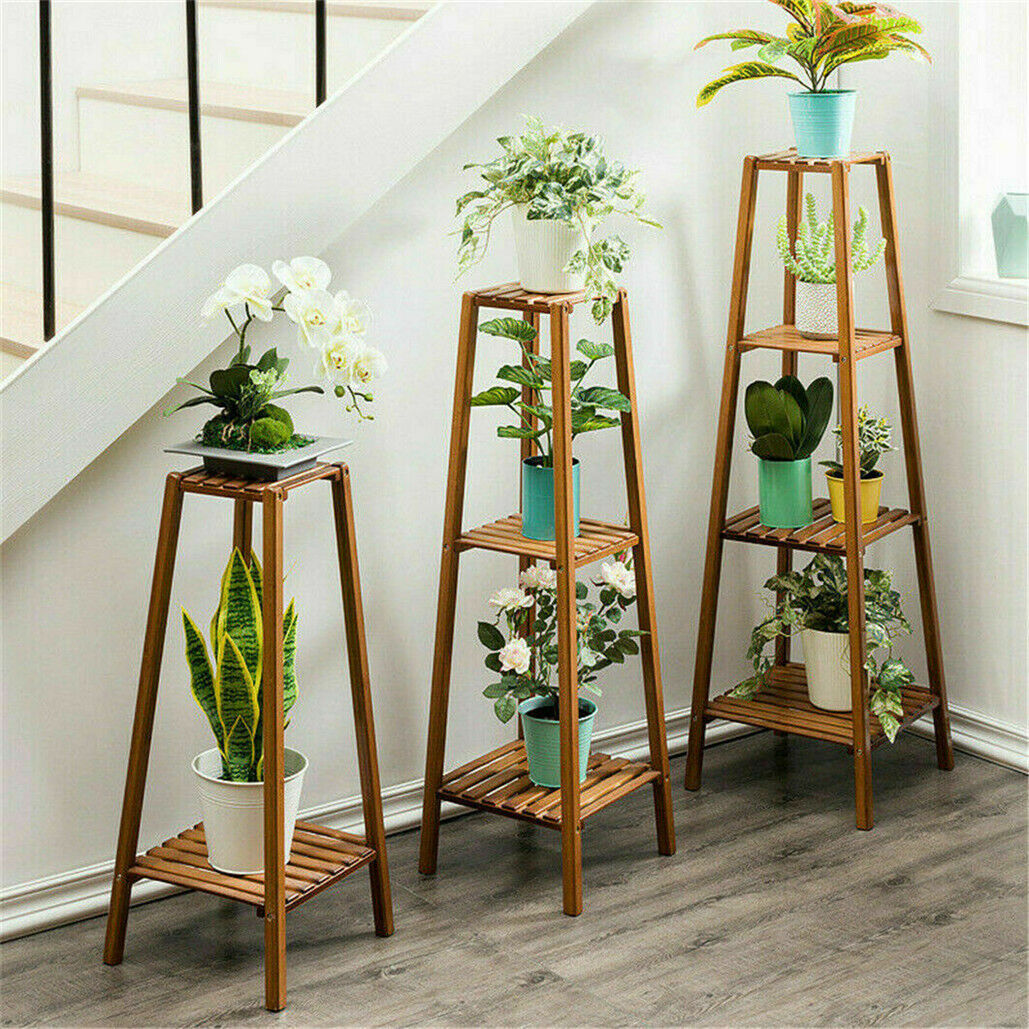
Conservatories and porches can fluctuate significantly between warm, humid summers and cold, damp winters. In these spaces, a varnished or sealed finish is worth the additional effort. Our 3-tier wooden plant and flower display stand and the foldable wooden ladder shelf plant stand are both worth treating with a water-resistant product if they will be used in a conservatory or covered porch setting.
When to Inspect and What to Look For
A quick visual inspection every month or two takes very little time and catches problems early. Look specifically at:
The feet and base. Softening, discolouration, or any visible mould growth at the base indicates moisture is reaching the wood from below. Address the floor-level moisture source, allow the base to dry fully, treat with oil or sealant, and consider adding foot pads if not already in place.
The shelf surfaces under pots. Remove each pot and tray and check the surface beneath. Early water staining tends to show as a ring mark or slight darkening of the wood. At this stage it is surface-level and can usually be addressed with light sanding and a fresh coat of treatment. Left longer, staining penetrates the wood and becomes harder to reverse.
The joints. Wooden stands connect at multiple points, and joints are where moisture tends to cause the most structural damage. Loosening joints, visible gaps, or any movement when the stand is lightly rocked side to side indicate moisture has been absorbed at those points. A wood adhesive and a period without heavy loading allows the joint to stabilise before further use.
For context on how wood stands compare with other materials in terms of maintenance requirements across different room environments, our post on choosing between wood and metal plant stands covers the practical differences in detail.
Choosing a Stand That Suits Your Environment
The most maintenance-efficient approach is matching the stand to the room from the outset. A raw or lightly finished wooden stand in a bathroom will require considerably more ongoing attention than the same stand in a dry living room. In higher-humidity spaces, choosing a stand with a sealed factory finish, or selecting a metal alternative, reduces the maintenance burden significantly.
Metro Elegance's wooden plant stand collection includes a range of finishes across different wood types, from natural bamboo to carbonised and sealed wood. Understanding which finish suits your intended room helps narrow down the right choice before purchase rather than having to manage a mismatch afterwards.
If you are comparing wooden and bamboo options and want a sense of how different constructions hold up in practice, our post on wooden plant stands for a natural indoor look is worth reading alongside the material care guidance in this article.
A wooden plant stand that is chosen well, treated appropriately, and maintained with a few consistent habits will hold its condition and appearance for a considerable time. The investment in the stand is protected by the relatively small effort of understanding what it needs.
Want Help Choosing the Right Stand for Your Space?
If you are unsure which finish or material suits your room's conditions, or you would like advice on care and maintenance for a specific Metro Elegance stand, our team is happy to help. Get in touch with us here and we will give you straightforward, practical guidance.
Frequently Asked Questions
How do I waterproof a wooden plant stand?
Apply a penetrating wood oil such as tung oil or Danish oil to untreated or lightly finished stands. Clean the surface, allow it to dry fully, apply a thin coat, and wipe off any excess once absorbed. For higher-humidity rooms, a water-resistant varnish or sealant provides stronger surface protection. Reapply annually or when the surface shows signs of water absorption.
Can wooden plant stands be used in bathrooms?
Yes, but they require more careful maintenance than in drier rooms. Use a water-resistant sealant or varnish rather than oil alone, keep the stand away from the direct splash zone of showers, and ventilate the bathroom after bathing to reduce humidity levels. Inspect the base and joints more frequently in bathroom settings.
Why is my wooden plant stand going mouldy?
Mould on a wooden plant stand typically indicates persistent moisture at the surface, often from overflowing drip trays, condensation from pots, or high ambient humidity. Address the moisture source first, clean the affected area with a mild diluted vinegar solution or specialist wood cleaner, allow the wood to dry fully, and then treat with an appropriate wood oil or sealant.
How often should I treat a wooden plant stand with oil?
For most indoor stands in UK homes, an annual application of wood oil is sufficient to maintain protection. In higher-humidity rooms such as bathrooms or conservatories, treat every six months. If the water test - a few drops on the surface - shows water being absorbed rather than beading, it is time to reapply regardless of the last treatment date.
What causes wooden plant stands to warp?
Warping in wooden stands is typically caused by repeated cycles of moisture absorption and drying. When one side of a wooden shelf or leg absorbs more moisture than the other - for example, the underside from a drip tray and the top from ambient air - the differential expansion and contraction causes the wood to curve. Consistent moisture management and appropriate sealing of all surfaces reduces this risk.
Do drip trays fully prevent water damage to wooden stands?
Drip trays significantly reduce the risk of direct water damage but do not eliminate it entirely. Full trays left for extended periods still transfer moisture through contact with the wood surface. Emptying trays within a few hours of watering, and lifting pots periodically to wipe the surface below, provides more comprehensive protection than trays alone.
Can I repair a wooden plant stand that has already been water damaged?
Minor surface staining and softening can often be addressed by allowing the wood to dry fully, sanding the affected area lightly with fine-grit sandpaper, and reapplying an appropriate treatment. Deeper damage that has affected the structural integrity of joints or caused significant warping is harder to reverse. Early detection through regular inspection gives the best chance of managing damage before it becomes structural.