
Your front door is the first thing visitors see, and in most British homes, it's also the last thing you look at when you leave each morning. It sets a tone. Yet for many of us, the porch or entrance ends up as an afterthought - a doormat, perhaps a single neglected pot, and nothing else. It does not have to be that way.
Outdoor plant stands are one of the most practical and visually effective ways to bring your entrance to life. They add structure and height, they work with whatever architectural style you already have, and they give you a reason to invest in plants you actually enjoy looking at. At Metro Elegance, we think the entrance to your home deserves the same care and consideration as any room inside it.
This guide walks through everything you need to know - from choosing the right stand material for UK weather conditions, to styling tips that work whether you have a wide Victorian porch or a modest flat entrance.

Why the Entrance Deserves More Attention
There is a concept in design sometimes called the threshold moment - the pause between outside and inside. How that moment feels, visually and atmospherically, has a quiet but genuine effect on how relaxed or welcome you feel arriving home. It also shapes how guests experience your home before they even step inside.
Greenery is one of the most accessible tools for improving that moment. Plants soften hard surfaces, introduce natural colour, and make a space feel cared for. The challenge outdoors, especially in the UK, is managing them well. Plants left directly on the floor can look scattered or untended. A good plant stand organises them visually and lifts them so they can actually be seen.
Choosing the Right Material for UK Conditions
Before thinking about style, it is worth being realistic about the conditions your stand will face. The British climate is not extreme, but it is persistent - damp winters, variable springs, and the occasional heavy rain in July. Your stand needs to cope with all of it.
Bamboo and treated wood are popular choices for an outdoor plant stand that needs to feel warm and natural. Bamboo in particular holds up reasonably well in sheltered outdoor settings, such as a covered porch or a recessed entrance. Our 3-tier bamboo plant stand for balcony and garden is built with this kind of setting in mind - practical tiers, clean lines, and a natural finish that works alongside most exterior colour schemes.
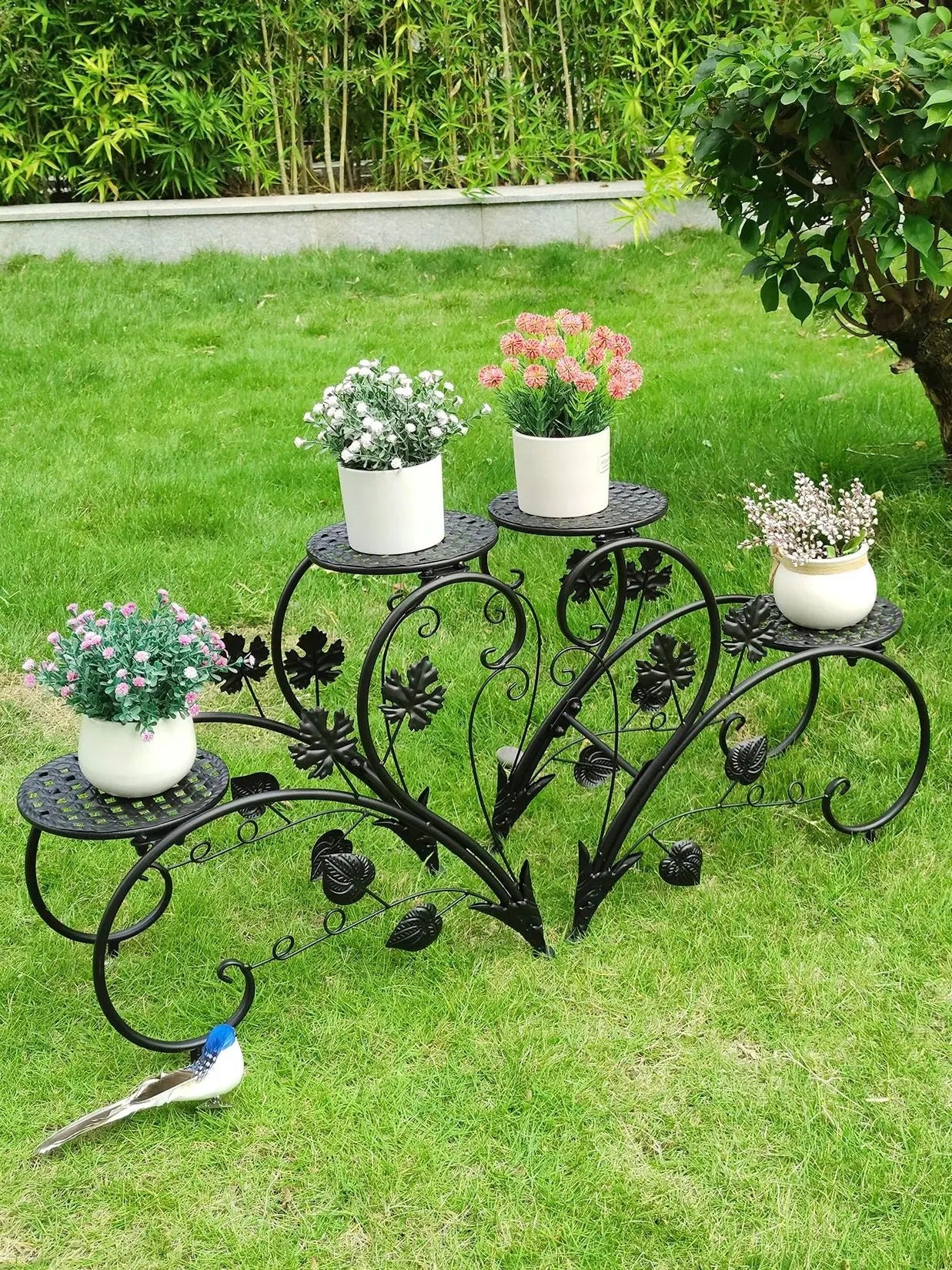
Metal stands are a strong option if your entrance is more exposed. Powder-coated or wrought iron finishes resist rust better than bare steel and can handle rain without deteriorating quickly. Our set of rustproof metal plant stands with four-tier flower display racks come in both white and black, which makes them easy to coordinate with front door colours. The rustproof finish is not just a marketing detail - it is genuinely relevant when your stand is sitting in the British winter for months at a stretch.
Solid pine and mixed-wood stands offer a middle ground. A solid pine wood multi-tier plant stand that is sealed or treated can handle sheltered outdoor conditions and brings a more traditional, cottage-style feel that suits many British homes beautifully.
At Metro Elegance, we stock a range across all three material types, so you are not locked into a single aesthetic.
Styling Your Porch: The Principles That Actually Work
Getting the look right outdoors is slightly different from indoor styling. There is less control over light and background, and you are working with an asymmetric or irregular space more often than not. A few principles help.
Work with height variation. One of the most common mistakes in porch styling is placing everything at the same level. A tiered stand immediately resolves this - it creates visual movement and allows each plant to breathe. If you are using a combination of a tall stand and individual low pots, stagger them intentionally rather than lining them up in a flat row.
Use symmetry at the door itself. Placing matching stands either side of the front door is one of the most effective and enduring design techniques for entrances. It creates a sense of arrival and formality without requiring much space. This works in both Georgian townhouses and modern semi-detached homes. The stands do not need to be identical, but they should feel balanced - similar height, similar visual weight.
Group in odd numbers when asymmetric. If you are working with one side of the entrance rather than both - perhaps because of a gate, a step, or simply the layout - group your pots and stands in threes or fives rather than twos or fours. Odd groupings tend to look more considered and less accidental.
Layer plants by texture and form, not just colour. A trailing plant at the top of a tiered stand, a mid-height bushy plant in the middle tier, and a compact low plant at the base gives you visual variety that holds interest across seasons. Our guide on how to use tiered plant stands to maximise light for your plants covers the practical side of this - how spacing and height affect the light each plant receives, which matters as much outdoors as it does in.
Plant Choices for a British Porch
The plants you choose matter as much as the stands themselves. For an entrance that looks good year-round in UK conditions, it is worth mixing evergreen structural plants with seasonal colour.
Evergreens for structure: Box (buxus), dwarf conifers, ornamental grasses, and hardy ferns all hold their shape and colour through winter. They give the entrance a baseline of greenery that does not disappear when the weather turns.
Seasonal colour: Bedding plants and bulbs can be rotated with the seasons. Pansies, primroses, and hyacinths work well in spring. Petunias, fuchsias, and trailing lobelia suit summer. Heathers, cyclamen, and ornamental kale carry autumn through into early winter. Because your plants sit in pots on a stand, swapping them out is genuinely straightforward.
Trailing plants are particularly effective on tiered stands. Ivy, bacopa, and creeping Jenny cascade over the edges and soften what might otherwise look like a rigid structure. Combined with a more upright plant in the centre, the effect is layered and considered.
Matching Your Stand to Your Home's Style
One thing Metro Elegance hears fairly often is that people are unsure whether a particular style of stand will work with their home. The honest answer is that it depends less on the stand and more on how it is styled.
A clean-lined bamboo ladder shelf can look just as good outside a contemporary new-build as it does in a more relaxed, boho-leaning garden setting - it depends on the pots you choose and the plants you put in them. Similarly, a wrought-iron tiered stand that might read as traditional in one context looks quite striking against a painted charcoal or navy door.
What matters more is scale. A small, two-pot stand in a wide, generous porch entrance will look lost. A large six-tier display in a narrow flat entrance will feel overwhelming. Our outdoor plant stand collection includes options across a wide range of sizes, so it is worth filtering by the approximate dimensions of your space before falling for a particular design.
Our broader plant stand collection is also worth a look, since several indoor-outdoor options work well in covered or semi-sheltered entrance settings.
Practical Details Worth Knowing
A few practical notes before you make a decision:
Weight and stability matter outdoors. Wind is a factor, particularly in more exposed locations. Heavier stands with a wider base are more stable. If your stand will be on an elevated step or balcony-style entrance, check that the weight of a fully planted stand is manageable to move if needed.
Pot drainage. Make sure any pots used on an outdoor stand have drainage holes. Sitting water in an outdoor pot during UK winters is one of the fastest ways to lose a plant to root rot. If a decorative pot does not have drainage, place a plain nursery pot with holes inside it.
Seasonal storage. Some bamboo and lighter wood stands benefit from being moved indoors or covered during particularly harsh winters. If that is not practical for your space, a metal stand with a treated or powder-coated finish may suit better.
Cleaning. Outdoor stands pick up dirt, algae, and general weathering more quickly than indoor ones. A mild soap and brush once or twice a year keeps wood and bamboo looking fresh. Metal stands generally need even less maintenance.
We have covered the outdoor side of things in more detail in our outdoor plant stand buying guide for UK gardens, which includes specific advice on weather-proofing and seasonal care.
Building the Look Over Time
One of the things we appreciate about plant stand styling is that it does not have to happen all at once. You can start with a single tiered stand at the door, get a sense of how it works with your space, and build from there. A second stand on the opposite side. A statement pot on the step. A trailing plant added to the middle tier.
The entrance to your home is a living space in the most literal sense - it changes with the seasons, with your plants, and with your own evolving sense of what you want it to feel like. At Metro Elegance, we design our stands with that ongoing relationship in mind: pieces that hold their quality and look well, season after season.
Ready to Transform Your Entrance?
If you have questions about which stand is right for your space, or you would like advice on specific dimensions and materials, our team is happy to help. Get in touch with Metro Elegance and we will point you in the right direction.
Frequently Asked Questions
What type of outdoor plant stand is best for a UK porch?
For a covered or semi-sheltered porch, bamboo and treated timber stands work well and offer a natural look. For more exposed entrances, powder-coated metal or wrought iron stands are more durable as they resist moisture and rust better in persistent damp conditions.
How do I stop my outdoor plant stand from falling over in wind?
Choose stands with a wide base and low centre of gravity. Use heavier ceramic or terracotta pots rather than lightweight plastic ones, as the added weight at the base improves stability. In very exposed locations, securing the stand against a wall or railing adds extra safety.
Can I use an indoor plant stand outdoors?
Some indoor-outdoor stands are rated for both uses, particularly treated wood and certain bamboo designs. It is worth checking the product description for weather resistance. Untreated wood or stands with exposed metal joints are better kept in a covered space or used indoors only.
How many plants should I put on my porch?
There is no fixed rule, but a useful guideline is to fill the space without blocking movement or sightlines to the door. A tiered stand with three to five plants usually works well for a standard residential entrance. Two matching stands either side of the door is a classic approach that suits most home styles.
What plants work best for a year-round porch display in the UK?
A mix of evergreen structural plants (buxus, ornamental grasses, hardy ferns) combined with seasonal flowering plants gives you colour and interest across all four seasons. Trailing plants on upper tiers of a stand add movement and soften the overall look.
How do I maintain a wooden outdoor plant stand?
Apply a light coat of outdoor wood oil or preservative once a year, or as needed, to keep the wood from drying out or cracking. Clean off any algae or moss with a mild detergent and brush. During extended periods of heavy frost or snow, moving the stand indoors or under cover will extend its life.
What size plant stand should I choose for a small entrance?
For a narrow or compact entrance, a tall, slender tiered stand or a ladder-style shelf maximises vertical space without taking up significant floor area. Corner stands are particularly efficient in small porches, as they use space that would otherwise go unused.