
Key takeaways
- The right chandelier balances scale, ceiling height, and room function
- Style should complement your home rather than dominate it
- Light output and bulb choice matter as much as appearance
- Placement and hanging height affect both comfort and impact
- A well-chosen chandelier can replace multiple light sources
A chandelier is often the most expressive lighting choice in a home. It draws the eye upward, shapes the atmosphere of a room, and quietly signals how the space is meant to be used. In UK homes, where layouts range from compact flats to period properties with generous ceiling heights, choosing the right chandelier requires a balance of proportion, practicality, and personal taste.
At Metro Elegance, we help customers navigate this decision every day. The perfect chandelier is rarely about following trends. It is about understanding your space, how you live in it, and how light supports both function and comfort.
This guide walks through the key considerations to help you choose a chandelier that feels considered, appropriate, and long-lasting in your UK home.
Start with the room, not the chandelier
One of the most common mistakes people make is choosing a chandelier they love before considering where it will hang. While it is natural to be drawn to a design, the room should always come first.
Ask a few simple questions:
- What is the primary function of the room
- How much natural light does it receive
- What is the ceiling height and room width
- Is the chandelier meant to be a focal point or a supporting element
Dining rooms, living rooms, stairwells, and hallways all place different demands on lighting. A chandelier that works beautifully over a dining table may feel intrusive in a low-ceiling living room.
At Metro Elegance, we encourage customers to think about chandeliers as part of the room’s structure rather than decorative add-ons.
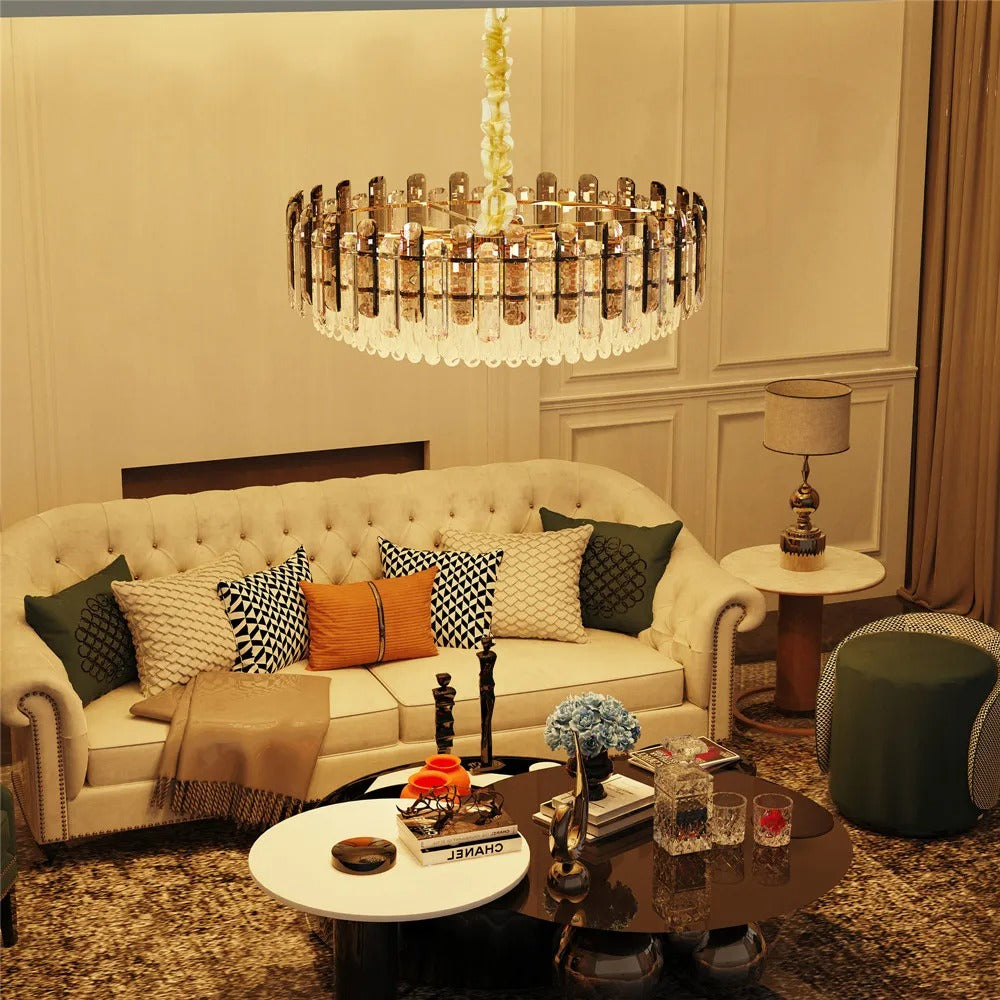
Understanding chandelier scale and proportion
Scale is one of the most important factors in chandelier selection.
A chandelier that is too small can feel insignificant, while one that is too large can overwhelm the space. In UK homes, where ceiling heights are often lower than in some international markets, this balance is especially important.
As a general guideline:
- Larger rooms can support wider or multi-tier chandeliers
- Smaller rooms benefit from simpler designs with open forms
- Compact spaces often suit chandeliers that emphasise height rather than width
Proportion also relates to furniture. Over dining tables or kitchen islands, the chandelier should feel visually connected to the surface below rather than floating awkwardly above it.
Ceiling height and hanging position
Ceiling height has a direct impact on chandelier choice and installation.
In rooms with standard UK ceiling heights, chandeliers should be compact and positioned carefully to avoid obstructing sightlines. Flush or semi-flush designs often work better in these spaces.
In homes with higher ceilings, such as period properties or stairwells, chandeliers can take on more presence. Multi-layered or elongated designs help fill vertical space without feeling heavy.
Hanging height matters too. A chandelier should provide light without causing glare or creating a sense of compression. Over dining tables, it should hang low enough to feel intimate but high enough to allow clear views across the table.
Our guide on chandelier placement and lighting balance explores this topic in more detail.
Choosing a chandelier style that suits your home
Chandeliers come in many styles, and not every design suits every interior.
Modern UK interiors
Clean lines, subtle finishes, and restrained sparkle tend to work best. Modern chandeliers often use simple geometric forms or slim crystal arrangements that add interest without excess.
Traditional and period homes
More decorative chandeliers can feel appropriate, especially in rooms with cornicing, ceiling roses, or original features. The key is harmony rather than imitation.
Transitional spaces
Many UK homes sit between classic and contemporary. In these cases, chandeliers with balanced proportions and neutral finishes often provide the most flexibility.
Our chandelier lights collection includes designs that work across a range of interior styles, making it easier to find something that feels natural rather than forced.
Material and finish considerations
Material choice affects both how a chandelier looks and how it interacts with light.
Crystal and glass elements reflect light and add brightness, which can be useful in rooms with limited natural light. Metal frames add structure and definition.
Finish matters too. Polished finishes feel brighter and more formal. Softer finishes feel warmer and more relaxed.
A refined option such as the luxury crystal chandelier with adjustable lighting offers flexibility by allowing you to adjust light tone depending on the room’s use.
Light output and bulb selection
A chandelier is not just decorative lighting. It must provide appropriate illumination for the space.
Consider whether the chandelier is:
- The primary light source
- Part of a layered lighting scheme
- Intended mainly for atmosphere
In most rooms, chandeliers work best as part of layered lighting, supported by wall lights or lamps. This avoids harsh lighting and allows you to adjust mood throughout the day.
Bulb choice also matters. Warm light often suits living and dining areas. Cooler tones may work better in kitchens or workspaces.
For dining spaces, our article on the role of chandeliers in entertaining explains how lighting affects atmosphere and comfort.
Choosing the right chandelier for specific rooms
Dining rooms
Chandeliers work particularly well over dining tables. They create focus and encourage a sense of occasion. The chandelier should align with the table shape and size rather than the room as a whole.
Living rooms
In living rooms, chandeliers should feel integrated rather than dominant. Central placement often works best, especially when combined with softer secondary lighting.
A contemporary choice like the industrial black kitchen island chandelier can suit open-plan living spaces where definition is needed without excessive ornamentation.
Hallways and staircases
These transitional spaces benefit from chandeliers that add character without blocking movement. Vertical designs often work well here.
Bedrooms
Chandeliers in bedrooms should feel calming rather than dramatic. Smaller designs with soft light are usually more suitable.
Open-plan living and chandeliers
Open-plan layouts are common in modern UK homes. Chandeliers can help define zones without walls.
A chandelier over a dining area within an open-plan space visually separates it from the living area. The key is ensuring the design relates to other lighting elements rather than feeling isolated.
If you are navigating this balance, our guide on how chandeliers transform UK living spaces offers useful insights.

Installation and safety considerations
Chandeliers should always be installed by a qualified electrician. Ceiling support, wiring, and weight capacity must be appropriate for the fixture.
It is also important to consider ceiling roses, existing wiring points, and switch placement. These practical details affect how the chandelier will look and function once installed.
Longevity and adaptability
A well-chosen chandelier should adapt as your home evolves. Neutral finishes, balanced proportions, and adjustable lighting features support long-term use.
Rather than choosing a design tied to a specific trend, aim for something that feels quietly confident. This approach reduces the need for replacement and keeps your interior cohesive over time.
Our approach at Metro Elegance
At Metro Elegance, we believe chandeliers should enhance everyday living, not just special occasions. We curate our lighting collections with UK homes in mind, considering ceiling heights, room sizes, and practical needs.
Whether you are refreshing one room or planning lighting across your home, our goal is to help you find chandeliers that feel considered, balanced, and easy to live with.
Final thoughts
Choosing the perfect chandelier for your UK home is about understanding space, light, and proportion. When these elements come together, a chandelier becomes more than lighting. It becomes part of how the room feels and functions.
If you are unsure which chandelier suits your home or would like guidance on size, placement, or style, our team at Metro Elegance is always happy to help.
Get in touch with us here:
Contact Metro Elegance
Frequently asked questions
What size chandelier is right for a UK living room?
The size depends on room dimensions and ceiling height. Larger rooms can support wider designs, while smaller rooms suit compact or open-frame chandeliers.
Can chandeliers work in homes with low ceilings?
Yes. Flush or semi-flush chandeliers are designed specifically for lower ceilings.
Should a chandelier be the main light source?
It often works best as part of layered lighting, supported by wall lights or lamps.
How high should a chandelier hang above a dining table?
It should be low enough to create focus but high enough to avoid blocking sightlines across the table.
Are crystal chandeliers suitable for modern homes?
Yes, when designs are restrained and balanced rather than overly ornate.
Do chandeliers suit open-plan spaces?
They can help define zones when placed thoughtfully and coordinated with other lighting.
Is professional installation necessary?
Yes. Chandeliers should always be installed by a qualified electrician for safety and correct positioning.