
Key Takeaways
- Chandelier size should match room dimensions and ceiling height
- Proper scale creates balance and prevents visual clutter
- Larger rooms benefit from statement lighting, smaller rooms need proportion
- Placement is just as important as size when designing lighting
- Dining tables, living areas, and hallways each require different sizing approaches
- A well-scaled chandelier enhances both lighting and overall design
Why Scale Matters in Lighting Design
Lighting does more than illuminate a room. It shapes how a space feels.
A chandelier, in particular, has a strong visual presence. When sized correctly, it can anchor a room and bring everything together. When it is too large or too small, it can disrupt the balance of the space.
At Metro Elegance, we believe that scale is one of the most important factors in interior design. Every piece should feel proportionate and intentional within the room.
Understanding Chandelier Proportion
Before choosing a chandelier, it helps to think about proportion rather than just size.
A well-proportioned chandelier:
- Fits comfortably within the room
- Complements surrounding furniture
- Does not overwhelm or disappear visually
This balance is what creates a cohesive and comfortable interior.
General Sizing Guidelines for UK Homes
There are a few simple ways to estimate the right chandelier size.
Room-based sizing
A common approach is to add the room’s length and width in feet, then convert that number to inches for the chandelier diameter.
For example:
- A 10 ft by 12 ft room = 22 inches diameter chandelier
This gives you a practical starting point, but it should always be adjusted based on layout and ceiling height.
Choosing the Right Size for Living Rooms
Living rooms often allow for more flexibility.
If the chandelier is intended to act as a focal point, it can be slightly larger. However, it should still leave enough visual breathing room.
The chandelier lighting collection offers a range of options suited to different room sizes and layouts.
For example, the industrial 5 bulb black kitchen island chandelier pendant ceiling light introduces structure without overwhelming the space.
If you are planning your layout, this guide explains how lighting placement influences the room:
how to position chandeliers for better balance
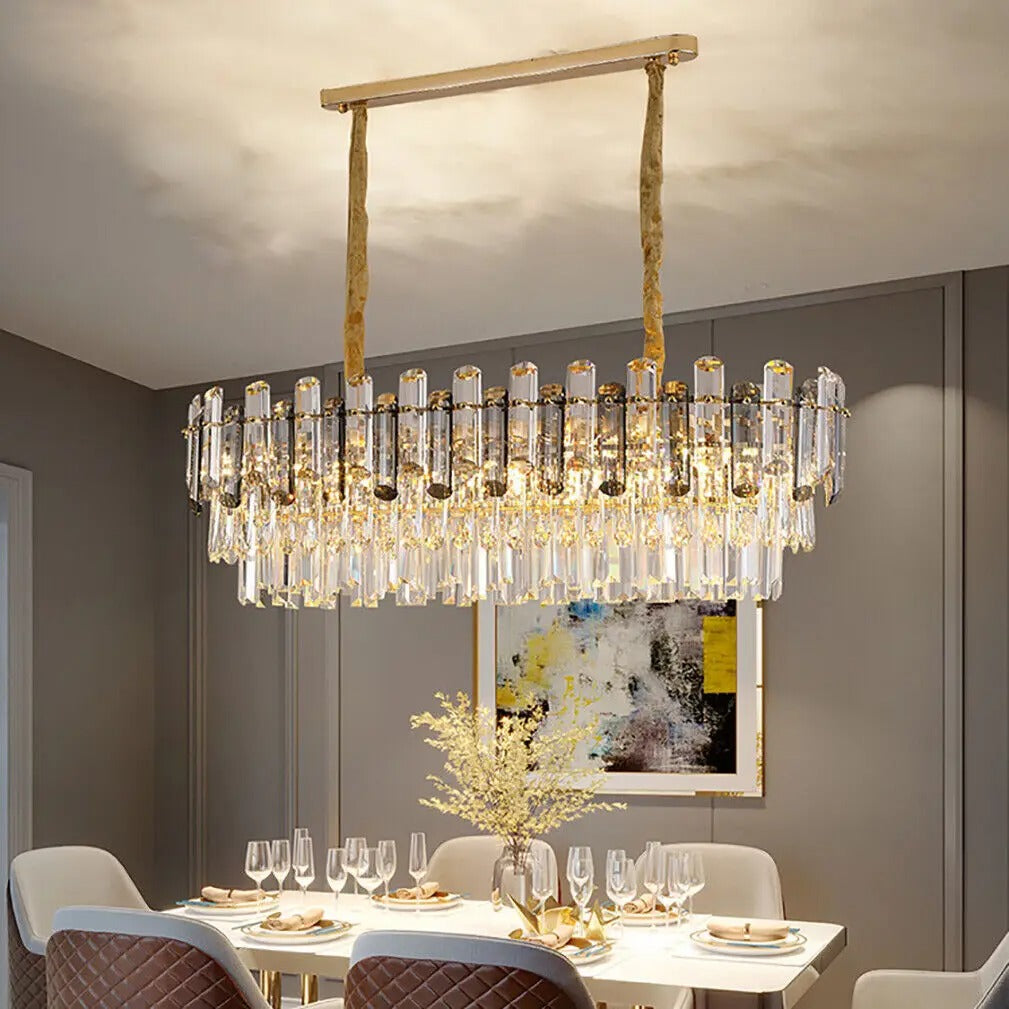
Dining Room Chandelier Sizing
Dining rooms require a more precise approach.
Instead of focusing only on room size, consider the table dimensions.
A useful guideline:
- The chandelier should be around half to two-thirds the width of the table
For example:
- A 120 cm table pairs well with a chandelier around 60 to 80 cm wide
The chandelier should sit centrally above the table and align with its shape.
If you are comparing styles, this resource can help refine your decision:
modern and traditional lighting styles explained
Hallways and Entryways
In smaller spaces such as hallways, proportion becomes even more important.
A large chandelier can overwhelm the area, while one that is too small may lack presence.
In these areas:
- Choose slimmer designs
- Keep height in mind to avoid obstruction
- Ensure it complements nearby furniture
Ceiling Height and Hanging Distance
Height plays a key role in both comfort and appearance.
For standard UK ceilings:
- Leave around 2.1 to 2.2 metres clearance from floor to bottom of chandelier
For dining tables:
- Hang the chandelier approximately 75 to 90 cm above the table
Adjustments may be needed depending on your specific layout.
Statement Chandeliers in Open Spaces
Open-plan homes offer more flexibility.
A chandelier can be used to define zones within a larger space, such as separating a dining area from a living area.
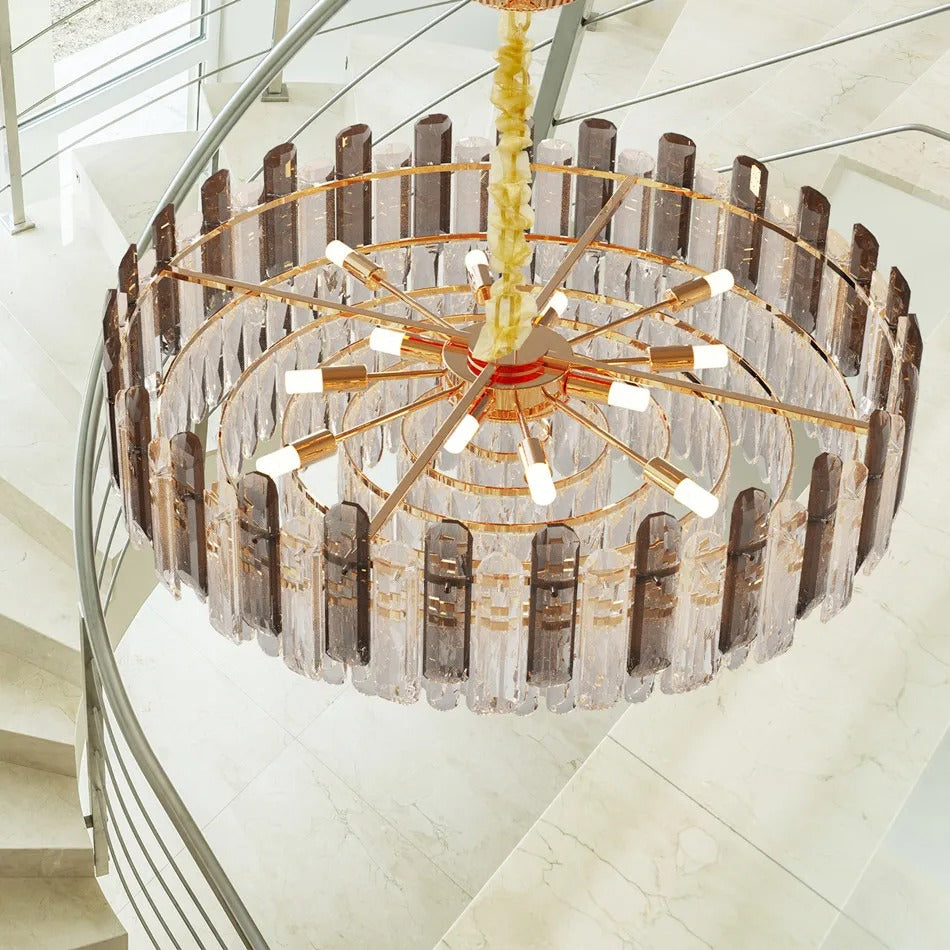
The crystal chandelier designs for elegant interiors provide options that act as focal points while maintaining balance.
A piece like the modern rectangular crystal raindrop chandelier pendant ceiling light fixture adds structure and visual interest without overcrowding the space.
For additional inspiration on how lighting shapes interiors, this article offers useful ideas:
how chandeliers influence atmosphere in UK homes
Matching Chandelier Size with Furniture
A chandelier should always relate to the furniture beneath it.
For example:
- Large sofas pair well with wider fixtures
- Compact seating areas benefit from smaller designs
- Dining tables should align directly with chandelier width
This connection creates a cohesive and balanced layout.
Avoiding Common Sizing Mistakes
Even well-designed spaces can be affected by incorrect chandelier sizing.
Choosing too small
A chandelier that is too small may look disconnected from the room.
Going too large
Oversized fixtures can dominate the space and feel overwhelming.
Ignoring ceiling height
Low ceilings require more compact designs to maintain comfort.
Poor placement
Even the right size chandelier can feel off if not positioned correctly.
Taking a measured approach helps avoid these issues.
Creating Balance with Surrounding Decor
A chandelier should work alongside other elements such as furniture and wall decor.
If the chandelier is highly decorative, keep surrounding pieces simple. If it is minimal, you can introduce more texture elsewhere in the room.
This balance ensures the lighting enhances the space rather than competing with it.
Final Thoughts
Choosing the right chandelier size is not just about measurements. It is about how the piece interacts with your space.
By considering room size, ceiling height, and furniture layout, you can find a chandelier that enhances both function and design.
At Metro Elegance, we believe that well-proportioned lighting creates more comfortable and cohesive interiors. With the right choice, your chandelier becomes a natural part of your home.
CTA
Looking to find the right chandelier for your space?
Explore our collection or speak with our team for personalised advice.
👉 Contact Metro Elegance
FAQ
How do I calculate the right chandelier size for my room?
A common method is to add the room’s length and width in feet and use that total as the chandelier diameter in inches. This provides a starting point, but you should also consider ceiling height and furniture layout to refine your choice.
What size chandelier should go over a dining table?
The chandelier should typically be about half to two-thirds the width of the dining table. This keeps it proportionate while still providing enough light and presence. Positioning it centrally above the table helps maintain balance.
Can a chandelier be too big for a room?
Yes, an oversized chandelier can dominate the space and make it feel unbalanced. It may also affect movement and visibility. Choosing a size that fits comfortably within the room ensures both practicality and visual harmony.
How low should a chandelier hang?
In most rooms, the bottom of the chandelier should be at least 2.1 metres from the floor. Over dining tables, it is usually positioned around 75 to 90 cm above the surface to provide both function and aesthetic balance.
Are chandeliers suitable for small UK homes?
They can work well when chosen carefully. Smaller or more minimal designs are often better suited to compact spaces. The key is to maintain proportion and avoid overcrowding the room.
What type of chandelier works best for modern interiors?
Modern interiors often suit chandeliers with clean lines and simple shapes. Materials like glass, metal, or subtle crystal detailing can enhance the space without adding unnecessary complexity.
Should chandelier size match furniture size?
Yes, aligning chandelier size with nearby furniture helps create a cohesive look. For example, a large dining table pairs best with a wider chandelier, while smaller furniture works better with more compact lighting.