
Most houseplants are bought with good intentions and placed wherever seems convenient - on a windowsill if there is space, on a coffee table, or directly on the floor in a corner. This approach works up to a point, but it leaves a significant amount of value on the table. The placement of a plant affects how it grows, how long it stays healthy, how it looks in the room, and how easy it is to maintain. A plant stand changes all of those things at once.
This is not about following an interior design trend. It is about understanding why elevation genuinely helps plants perform better, and how the same piece of furniture that improves plant health also happens to improve the room it sits in. At Metro Elegance, we have been helping customers find the right plant stands for their homes long enough to see the difference a well-chosen stand makes in practice - not just visually, but in how plants actually thrive.
This guide covers the real, practical reasons why elevating your plants matters.
Better Access to Natural Light
Light is the resource that limits plant performance more than any other in a UK home. The UK's northerly position means indoor light levels are lower overall than in most of Europe, and the difference between a plant positioned on the floor in the middle of a room and one elevated on a stand beside a window can be the difference between a plant that grows well and one that slowly declines.
The principle is straightforward. Natural light enters a room from windows and travels horizontally and downward. A plant on the floor in a room with standard-height windows is positioned as far from the source of incoming light as it is possible to be. The same plant elevated on a tall stand beside the window receives significantly more usable light - particularly from the sky angle that matters most in north-facing UK rooms where no direct sun enters at any point in the day.
This is one of the reasons tiered stands are so effective in lower-light rooms. They allow multiple plants to occupy positions within the brighter zone close to the window, stacked vertically rather than spread across the floor. The upper tiers receive the most light, the lower tiers progressively less, which allows different plant types to be matched to the light level they receive at their specific tier position.
For anyone who has noticed plants in floor-level pots slowly leaning toward a distant window, or losing lower leaves while the upper growth stays healthier, the light-access explanation is almost always the correct one. Elevating the plant on a stand closes the gap between the plant and its light source, which is the most direct intervention available.
Improved Airflow Around the Plant
Airflow is an underappreciated element of plant care. Plants on the floor - particularly those pushed into corners or tucked beneath furniture - sit in still air conditions where humidity from the soil and transpiration from the leaves does not disperse efficiently. This creates conditions that favour fungal diseases, including the leaf spot and root rot issues that are among the most common causes of houseplant failure.
Elevating a plant on a stand lifts it into the general air circulation of the room. The air movement may be minimal - a gentle drift from a window, or the convection currents created by a warm room - but it is meaningfully better than the essentially static conditions at floor level. Better air movement around the leaves and the soil surface helps the plant regulate its temperature, discourages the surface mould growth that occurs on soil in still damp conditions, and reduces the likelihood of pest infestations, which are also more common in undisturbed low-airflow positions.
This benefit is particularly relevant in UK homes during winter, when windows are less frequently opened and indoor air tends to be more static. A plant on a stand in the general room space maintains better air circulation than one in a floor-level corner throughout the heating season.
Vertical Interest and Room Proportion
The visual case for plant stands is less often articulated clearly, though it is immediately apparent when a well-positioned stand is in place. Rooms read better when there is visual interest at multiple heights. A room where all the furniture is at seat height - sofas, tables, low storage - feels horizontally dominated and can feel wider than it is tall. Introducing vertical elements - a tall stand, a tiered display, a plant at shoulder height - balances this by drawing the eye upward and making the ceiling feel more distant.
Plant stands are one of the most accessible ways to introduce this vertical element. A tall bamboo stand in the corner of a living room, or a tiered display along a hallway wall, changes the proportion of the space in a way that is difficult to achieve with other furniture without significant cost or structural change.
The layering effect of a multi-tier stand creates visual depth that a single flat arrangement on a table or shelf cannot replicate. The eye moves through the levels of the display - from the trailing plant at the top, through the mid-height bushy growth in the middle, to the compact lower tier - and that movement creates a sense of richness and consideration that a single pot on the floor simply cannot.
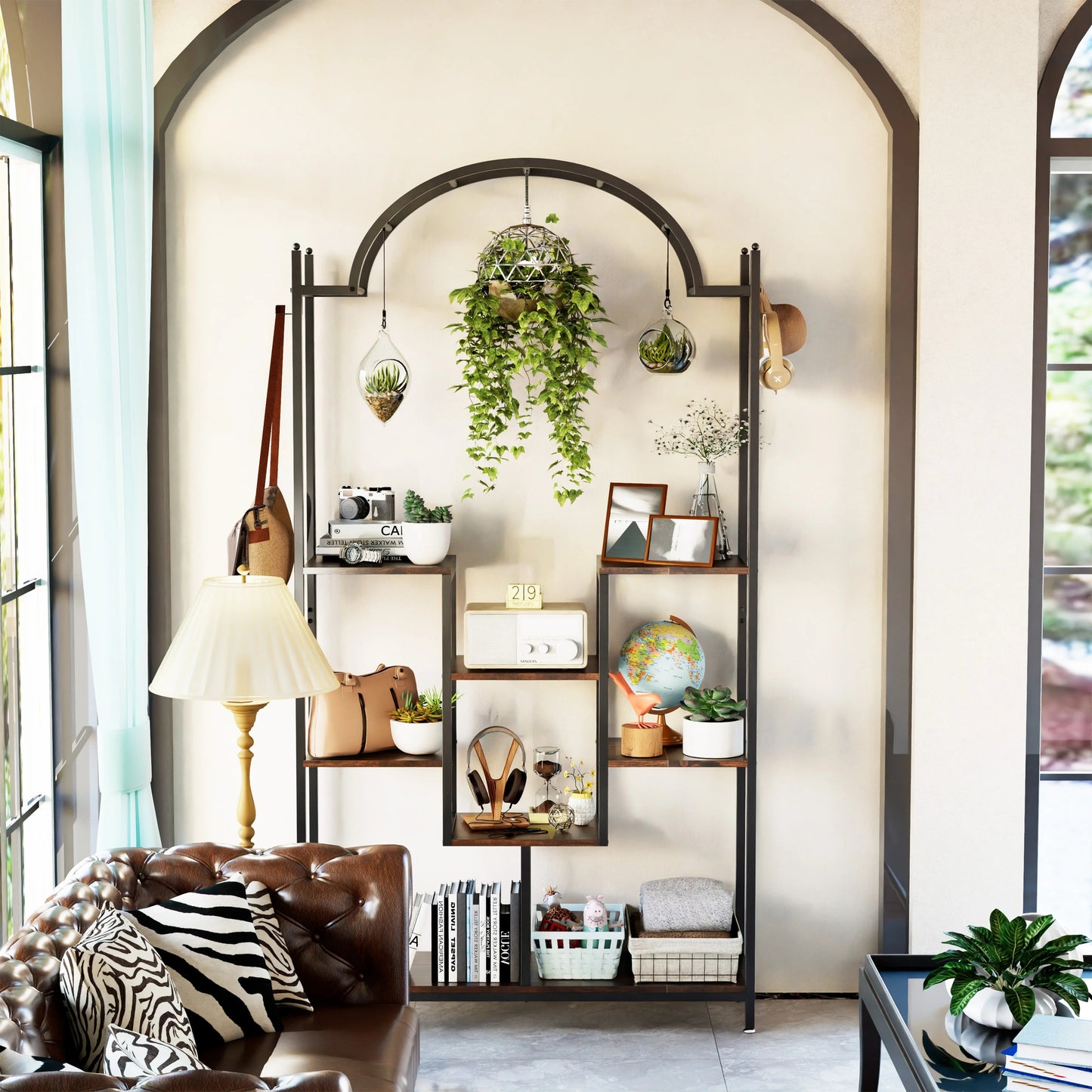
Our 5-tier half-moon bookshelf plant stand with an industrial curved design illustrates this well. The curved, multi-tier profile creates a display shape that fills a corner with visual interest across five levels, which is a room contribution that no floor pot can make, regardless of how large or beautiful the plant within it is.
Protecting Plants from Pets and Children
A plant on the floor is accessible to everyone in the household, including members who are likely to damage it - cats that chew leaves, dogs that dig soil, toddlers that pull stems. Some plants commonly kept indoors are also toxic to pets and children if ingested, which makes floor-level positioning a genuine concern in many households.
Elevating plants onto stands places them out of reach of floor-level contact. A plant on a stand at table height is generally beyond the interest of most dogs and young children. A plant on the upper tier of a tall stand is inaccessible to most household animals and all but the most determined toddlers.
This is not a theoretical benefit. For households with pets - cats in particular, who are known to chew certain houseplants - the difference between a floor pot and a stand-elevated one can be meaningful for both the plant's survival and the pet's safety. The plant is less damaged, the soil is less disturbed, and the risk of ingestion is reduced simply by adding height.
Better Drainage Management
One of the least discussed practical benefits of plant stands relates to drainage. A plant pot on the floor - particularly on carpeted areas or wooden flooring - creates a persistent drainage management problem. Drip trays under floor pots often go unnoticed and unchecked, allowing water to collect and sit against the floor surface. On wooden floors this causes marking and potentially swelling of the boards over time. On carpet it creates a damp patch that encourages mould growth in the underlay.
A plant on a stand is more visible and more accessible, which means drip trays are more likely to be noticed and emptied. The stand itself creates a gap between the pot base and the floor, which allows both visual inspection and access for cleaning beneath the pot - something that is genuinely difficult with floor-level pots pushed into corners.
The combination of better drainage visibility and easier tray management means that plants on stands tend to be watered more carefully and their drainage better managed, which benefits the plant directly as well as protecting the floor beneath.
Protection for Floors and Surfaces
Beyond drainage, elevating plants on stands protects floors and room surfaces from the general wear that comes from pots sitting directly on them. The mineral deposits from hard water, the soil residue from potting and repotting, and the moisture patterns created by pots in fixed positions over months and years all leave marks on floors that are sometimes permanent, particularly on natural materials like hardwood or stone tiles.
A plant stand creates a defined, manageable footprint for the display. The stand's feet can be fitted with protective pads, the area beneath can be cleaned, and if the display needs to change, moving a stand is considerably easier and less damaging than moving multiple floor pots that have been in contact with the floor surface for extended periods.
Space Efficiency in Smaller UK Homes
Many UK homes - particularly urban flats and smaller terraced houses - have limited floor space. Placing plants directly on the floor compounds the sense of clutter that limited floor space creates. A plant stand concentrates plants vertically rather than horizontally, which means more plants occupy less floor area.
A tiered stand holding five or six pots takes up roughly the same floor space as a single large floor pot, but creates a display that reads as more substantial and considered. For anyone who wants to keep more plants than the floor space seems to allow, a tiered stand is the most practical way to resolve that constraint.
Our guide on best indoor plant stands for small spaces and compact UK homes covers the specific stand types and sizing approaches that work best in limited floor areas - worth reading alongside this article for anyone making the most of a smaller home.
Making the Most of Every Room
Plant stands work in every room, and the benefit of elevation applies consistently across different room types. In a living room, a tall stand creates a focal point that competes visually with the television rather than being lost below furniture height. In a hallway, a narrow tiered stand fills vertical space without blocking movement. In a bedroom, an elevated plant at window height provides the ambient greenery that contributes to the sense of calm the room is meant to create.
Our wooden plant stand holder is a compact option that works in most room types without requiring significant floor space, and our 6-tier wood plant flower stand with display shelving suits larger rooms where a more substantial display is the goal.
Metro Elegance's indoor plant stand collection covers options across the full size and style range, from single-plant displays to large multi-tier arrangements. For outdoor use, our outdoor plant stand range applies the same elevation benefits to balconies, patios, and garden settings where light access, drainage management, and surface protection are equally relevant.
For a more detailed look at how stand height and the layering of plants across different tiers affects both plant health and visual impact, our post on how tiered plant stands help plants get more light provides useful practical context.
The case for elevating plants is not really about aesthetics first, though the visual improvement is genuine. It is about giving plants the conditions they need to perform well - better light, better airflow, better drainage - and creating a display arrangement that works for the room and the household alongside the plants themselves. A plant stand is one of the few pieces of furniture that benefits both what sits on it and the room it sits in.
Want Help Choosing the Right Stand for Your Home?
If you would like advice on which stand suits your specific room, plant collection, or lifestyle, the team at Metro Elegance is happy to help. Get in touch with us here and we will give you practical, straightforward guidance.
Frequently Asked Questions
Why should I use a plant stand instead of putting plants on the floor?
Elevating plants on a stand improves their access to natural light, increases airflow around leaves and soil, makes drainage management easier, and protects the floor surface beneath the pot. Plants on stands are also less accessible to pets and children and take up less visual floor space than multiple pots scattered across the ground.
Do plant stands really help plants grow better?
Elevation improves two of the most important conditions for plant growth - light access and airflow. A plant closer to its light source receives more usable light, which directly affects its ability to photosynthesise and grow. Better airflow around the plant reduces the risk of fungal issues and surface soil problems that are more common in still, low-level positions. These improvements in growing conditions can make a meaningful difference to how a plant performs over time.
What height plant stand is best for indoor use?
The right height depends on the room, the plant, and the placement goals. For light maximisation in a UK room, a stand that brings the plant close to window height in its position is generally most beneficial. For visual impact, a stand that creates interest at a height between table level and ceiling is most effective. Tiered stands address multiple heights simultaneously and are a practical solution when both light and display goals matter.
Can plant stands help in rooms with limited natural light?
Yes, in a specific way. Stands allow plants to be positioned as close to the available light source as practically possible - directly beside or adjacent to the window rather than on the floor in the middle of the room. In north-facing rooms or other low-light settings, this proximity to the window is the most impactful adjustment available for improving the light conditions a plant receives.
Are plant stands worth it for small homes?
Particularly so. In smaller homes and flats where floor space is limited, tiered stands allow multiple plants to occupy the same floor footprint that a single large floor pot would use. This makes it possible to keep more plants in a limited space without adding to floor clutter. The vertical nature of a stand display also makes a small room feel taller and more considered, which is a visual benefit beyond the practical plant-care advantages.
Do plant stands help with pet and child safety?
Elevation places plants beyond easy floor-level access for dogs, cats, and young children. For households with pets or children, placing plants - particularly those that may be harmful if ingested - on stands at height rather than at floor level reduces the risk of contact and ingestion. It also protects the plants themselves from soil disturbance, leaf damage, and the general interest that animals and small children tend to show toward floor-level pots.
What is the most practical plant stand for a UK home?
The most practical stand is the one that matches the specific room conditions and household needs - a tiered bamboo stand for a smaller space where portability and light maximisation matter, a heavier multi-tier wooden stand for a larger living room where display impact and stability are the priorities, or a compact single-plant stand for a bedroom or hallway where a more subtle presence suits the room. There is no single universally practical option, but understanding the key criteria - light, space, weight, and stability - makes the right choice clear for each situation.